See how work is changing before the effects become obvious.
Calibrative brings together the patterns already present in workplace communication to create a comprehensive view of engagement, culture, collaboration, workload, and change over time.
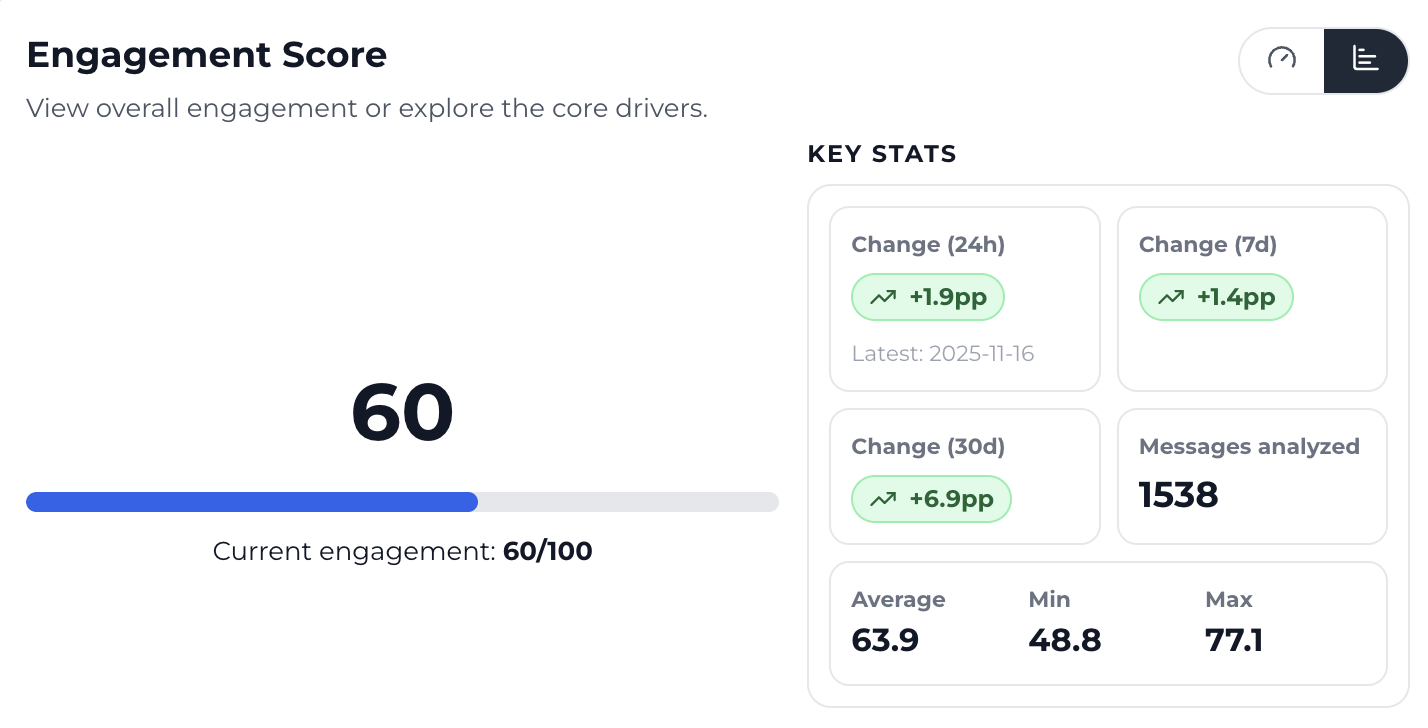
Start with a clear picture of how the organization is doing. Calibrative combines multiple communication signals into a comprehensive engagement score, then adds the trend context needed to distinguish short-term movement from a meaningful shift.
✓Comprehensive engagement score: a concise top-line measure built from multiple communication signals, giving leaders a broader view than any single metric can provide.
✓Trend context: understand direction and momentum rather than relying on a single snapshot.
✓Organization and group views: move from the big picture into the teams and cohorts that make it up.
A top-line engagement view with the trend behind the score.
2
Explain change.
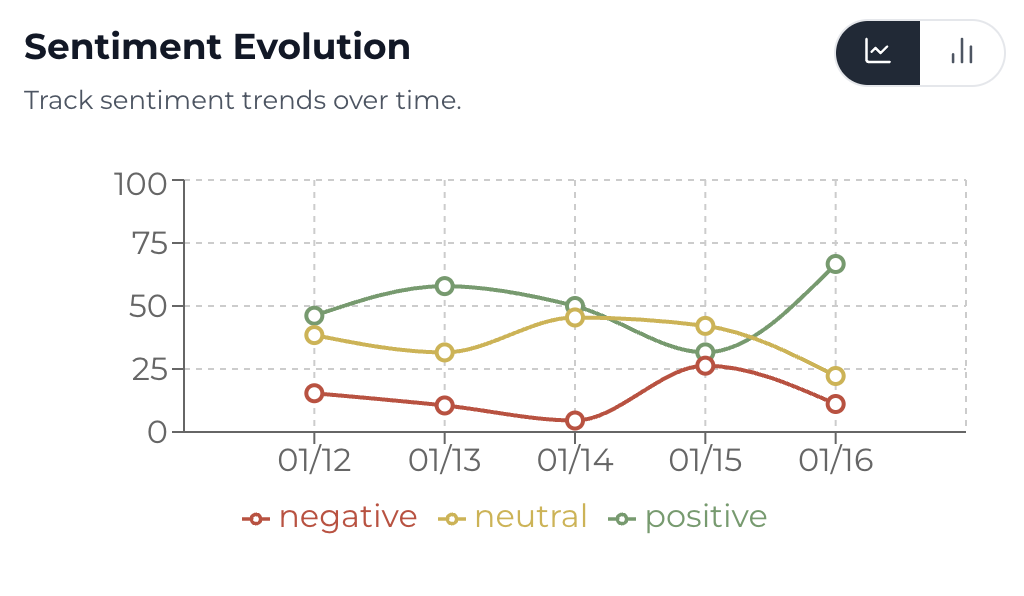
The engagement score provides the broad picture. Calibrative then shows the communication signals contributing to movement in that score so leaders can understand what changed and which patterns are shaping the overall result.
✓Signal trends: follow changes in sentiment, energy, politeness, and other communication patterns over time.
✓Feature evolution: see which signals are becoming more or less influential as conditions change.
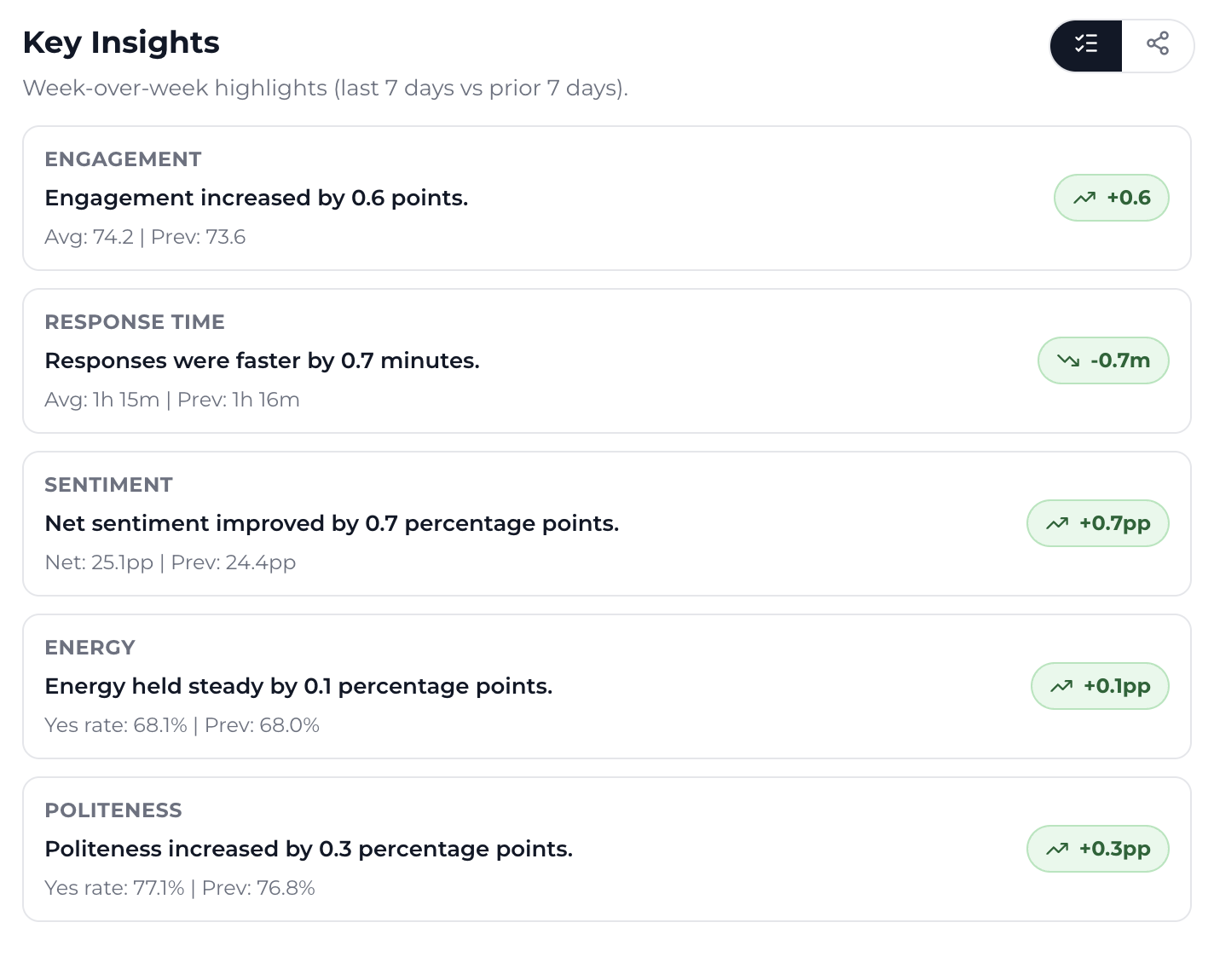
✓Key insights: surface changes that deserve attention without asking leaders to interpret every chart themselves.
Signal-level trends help explain movement in the overall engagement picture.
3
Compare teams.
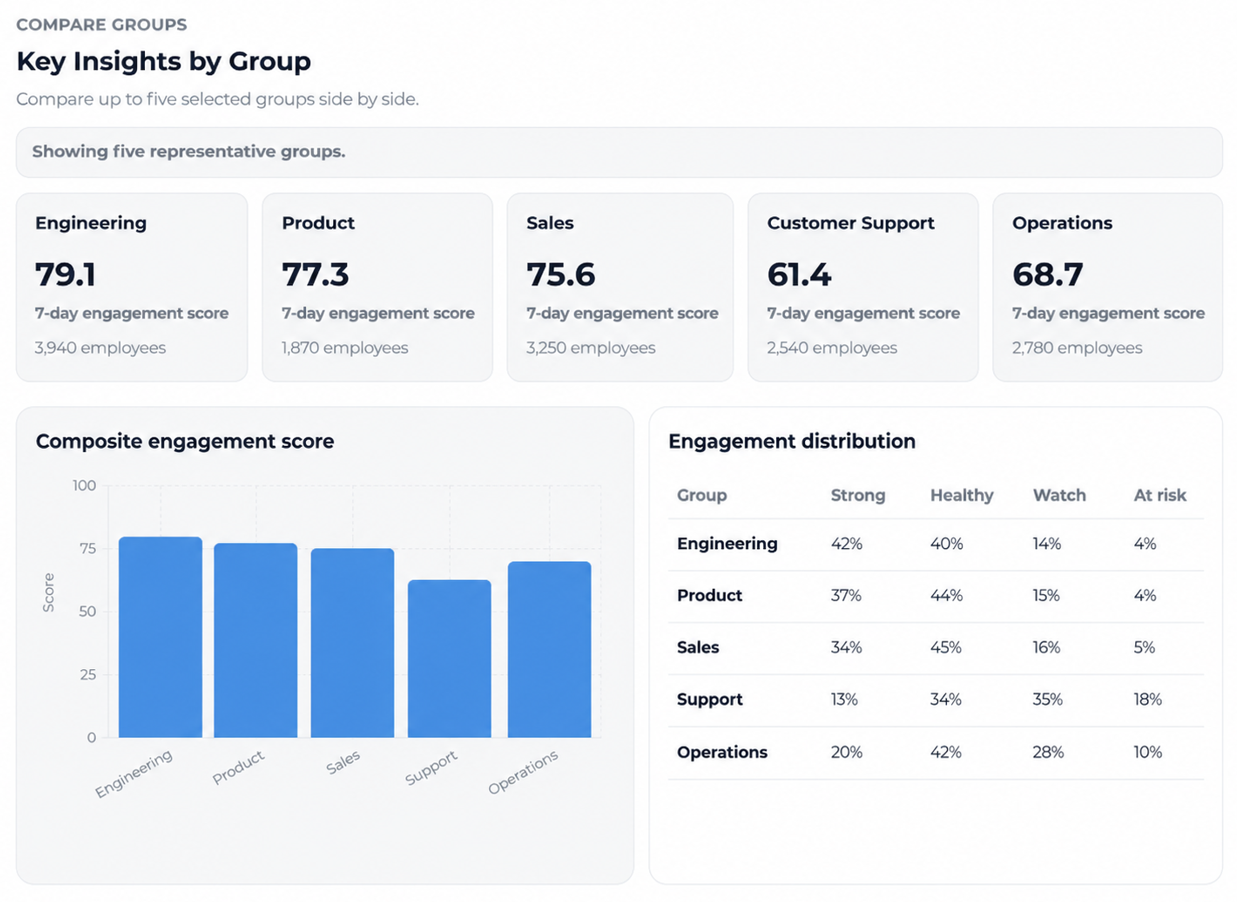
Organization-wide averages can hide important differences. Calibrative lets leaders compare teams, cohorts, or other groups side by side to see where experiences are aligned, where they diverge, and where change is concentrated.
✓Side-by-side comparison: compare multiple groups across the same engagement and communication measures.
✓Shared context: use the same time periods and signals so differences are easier to interpret.
✓Focused follow-up: identify which groups merit deeper exploration instead of treating the organization as one average.
Compare groups side by side across the same engagement and communication measures.
4
Understand culture.
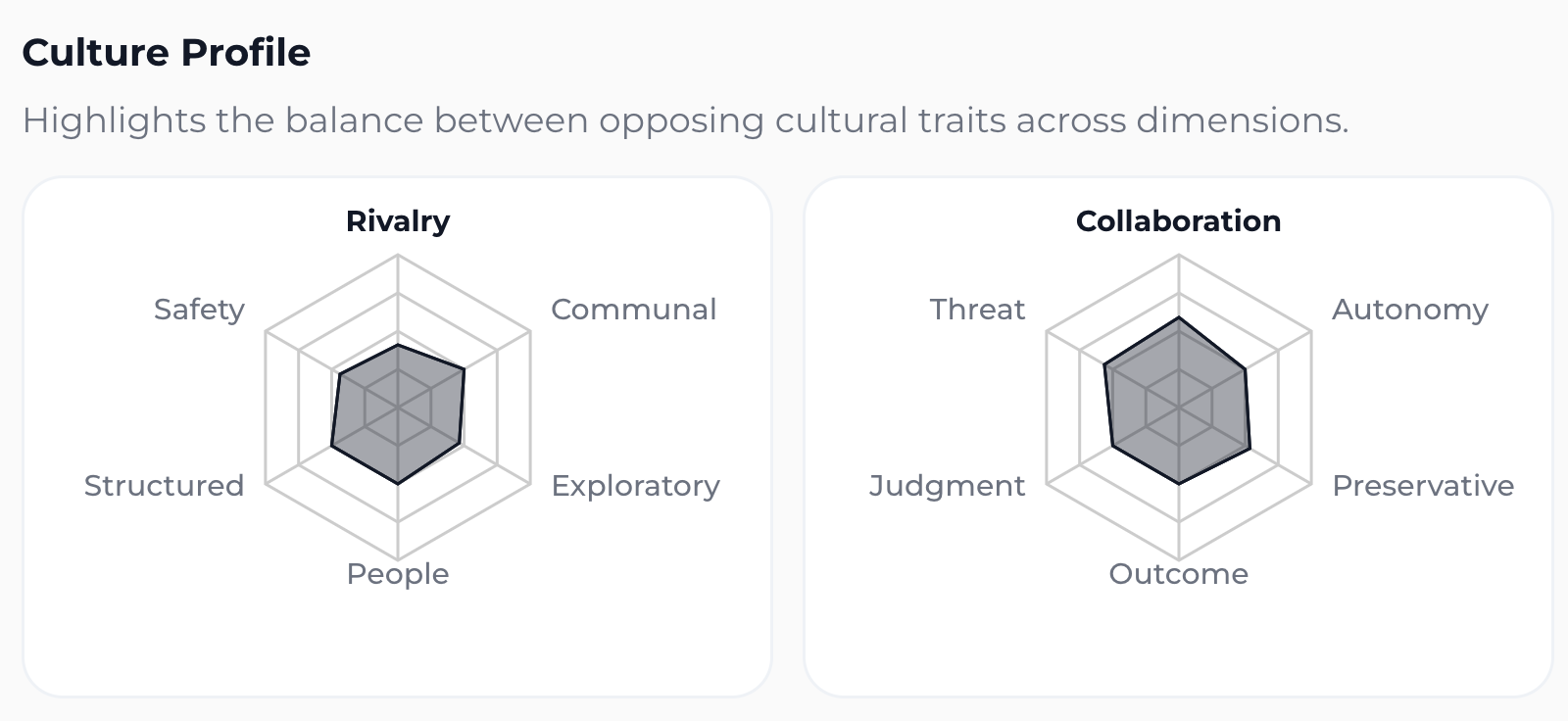
Culture is expressed in everyday communication long before it appears in a survey. Calibrative looks for recurring language patterns that show how teams collaborate, make decisions, handle risk, and experience the workplace.
✓Culture dimensions: view the organization across consistent, interpretable dimensions instead of reducing culture to one vague score.
✓Change over time: track cultural movement as teams, leaders, or working conditions change.
✓Grounded interpretation: connect aggregate signals back to representative communication patterns when appropriate.
Culture dimensions make recurring communication patterns visible and trackable.
5
Identify organizational friction.
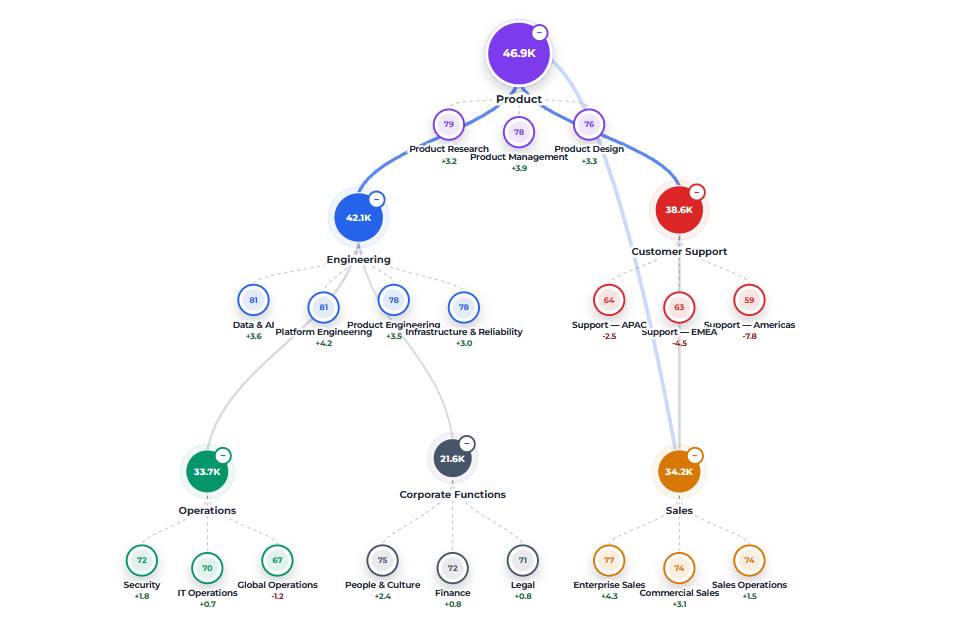
Communication structure, workload, and responsiveness often reveal where collaboration is becoming harder. Calibrative brings those signals together to help leaders spot bottlenecks, isolation, overloaded connections, and changing work rhythms.
✓Communication networks: see clusters, connectors, and areas where collaboration may be fragmented.
✓Activity patterns: track shifts in volume, cadence, and participation across the workweek.
✓Response-time trends: use sustained changes as context for workload, coordination friction, and support needs.
Communication networks make organizational connections, clusters, and potential friction points easier to see.
6
Act earlier.
Calibrative is designed to help leaders recognize meaningful changes while they are developing, understand the context behind them, ask better questions, and respond with better information.
✓Earlier visibility: identify shifts in engagement, communication, and culture as they develop.
✓Connected context: interpret one signal alongside the others instead of acting on an isolated metric.
✓Prioritized attention: focus leaders on the groups and changes that most warrant follow-up.
Key insights help surface the groups and changes that may deserve earlier attention.
One connected view
Each question leads naturally to the next.
Calibrative connects a comprehensive engagement score to the signals, groups, cultural patterns, and communication dynamics underneath it, giving leaders one connected view from broad organizational health to the details shaping it.
EngagementWhat is changing across the organization?
ExplanationWhich signals are contributing to the change?
ComparisonWhere is the experience different?
ActionWhat deserves attention while there is still time to respond?
Privacy & security
Built for sensitive workplace data.
Calibrative is designed for the sensitivity of workplace communication data, with controlled processing, encrypted data handling, and carefully managed access throughout the analysis workflow.
Encrypted data handlingUploads and results can remain encrypted throughout the processing workflow.
Isolated processingAnalysis can run in a dedicated processing environment rather than a shared analyst workflow.
Organization-level insightCalibrative brings together communication patterns across teams and groups to provide meaningful organizational context and a more complete view of engagement.
See Calibrative in context
Explore the product with sample data.
Open the demo to see how engagement, communication signals, culture, activity, networks, and response time come together in the Calibrative dashboard.